
Healthcare rebrand at scale Healthcare rebrand at scale: Unifying 200+ facilities under one brand system
Client Profile
After 30 years as twelve distinct yet affiliated hospitals (plus urgent care clinics and physician practices), a major nonprofit healthcare system chose to unify its operations under a single brand, forming one of the largest academic health systems in the United States. This integration sought to enhance the patient experience by providing seamless, coordinated care while leveraging the combined expertise of its world-class academic medical centers. By working as one, the organization aimed to deliver the highest quality care and accelerate groundbreaking scientific advancements.
Industry: Healthcare
System size: 200+ hospitals and outpatient facilities, 82,000 employees
Revenue: $18 billion
BrandActive services: Rebrand implementation planning, operational brand governance, brand management systems
The challenge: Rebranding 12 hospitals and 200 locations under one identity
Healthcare rebrands, as a baseline, are always complicated. To start with, doctors and staff often feel attached to the legacy brands of hospitals they’ve worked at for years and may not understand or agree with the investment required.
Patients may also have attachments to hospitals and clinics and need to recognize and learn to trust new identities in a crowded healthcare marketplace. Budgets are cause for concern as well, since every dollar spent on a rebrand needs to be justified against budgets for lifesaving care.
Then there are the logistics. To fully rebrand a single hospital, everything from signs to uniforms, digital platforms, and even invoices need to be updated across thousands of touchpoints.
Now, multiply that across 12 hospitals, 20 distinct, decentralized brand identities and 200 locations.
Strategic goals of the health system rebrand
The organization had three strategic goals guiding decision-making throughout the brand consolidation process:
- Strengthen recognition of community hospitals to drive higher patient traffic.
- Enhance the patient experience.
- Reduce costs and inefficiencies in brand management caused by fragmented operations.
According to a senior leader at the organization, prior to the unification and partnership with BrandActive, brand operations across the healthcare system had been chaotic. “Nobody was checking if the brand was accurate, if they were the right colors, the right placement, or good quality etc.”, they said. “The rebrand effort standardized and controlled the brand significantly from where it was before.”
1. Strengthen recognition of local hospitals to drive higher patient traffic.
Brand governance and asset-specific guidelines for healthcare facilities
Brand strategy firms often help create high-level brand guidelines and visual identity systems, and healthcare organizations need more specific guidance by branded assets, like ambulances or signage types. This organization was no different, so we developed asset-specific brand guidelines to ensure consistent and efficient branding on everything from signage to fleet (including 45 40-foot patient transport buses), ID badges, workwear and promotional items.
This work supported two recognition goals: elevating local hospitals through their connection to world-class institutions and boosting the organization’s overall visibility via high-impact assets such as signage, advertising, and fleet vehicles.
A big challenge was dealing with duplicate materials created across the system. Since the twelve hospitals and other healthcare facilities worked separately, they each ran their own ads, built their own websites, and started their own marketing projects. This led to too many campaigns, too many websites, and too many vendors, creating confusion for both internal teams and the public.
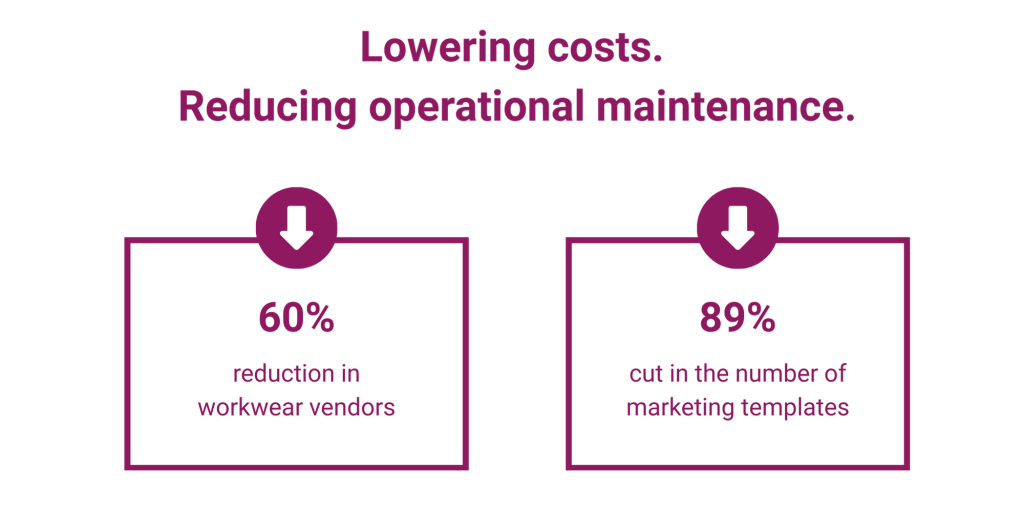
Going through each branded asset type, we looked for opportunities to consolidate vendors, phase out unnecessary materials, and simplify management to strengthen brand consistency. For example, we helped the organization reduce their workwear vendors by 60% and cut the number of marketing templates by 89%. These improvements also lowered costs, both during the rebrand and in the long term by reducing operational maintenance.
Building scalable brand operations across 200+ facilities
- Empowered brand ambassadors
To ensure long-term brand consistency and reduce inefficiencies, we empowered department leaders as brand ambassadors, strengthening awareness and discipline across the organization. - Established a business need for a new centralized Facilities role for ongoing operations
Recognizing the need for centralized oversight, we established a new role within Real Estate and Facilities to bridge the gap between Operations and Marketing, ensuring brand integrity across all locations. - Improved approvals process
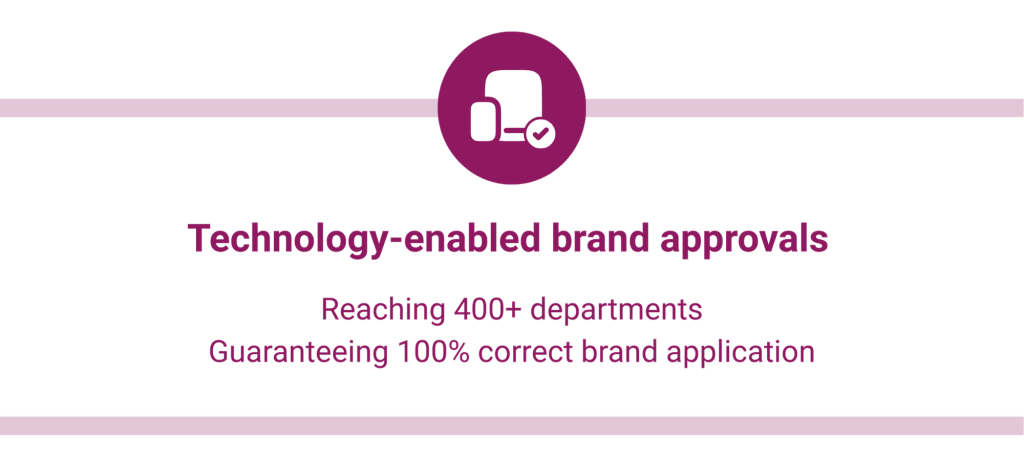
To further streamline brand management, we implemented a technology-enabled brand approval process, reaching 95% of the organization (400+ departments) and guaranteeing 100% correct brand application for three years.
2. Enhancing the patient experience through signage and wayfinding
Clear, effective branding plays a crucial role in the patient experience, so we focused on improving campus wayfinding and signage compliance across over 200 patient facilities, ensuring alignment with the State’s new emergency regulations.
To maximize brand impact where it mattered most, we also prioritized high-visibility patient touchpoints while strategically de-branding lower-impact items like select IT systems, operational signs, and disposables. At the same time, we strengthened workforce understanding of strategic brand usage, equipping staff with the knowledge to apply branding in ways that build patient trust and reinforce recognition across the healthcare system.
3. Cutting costs and complexity through brand standardization
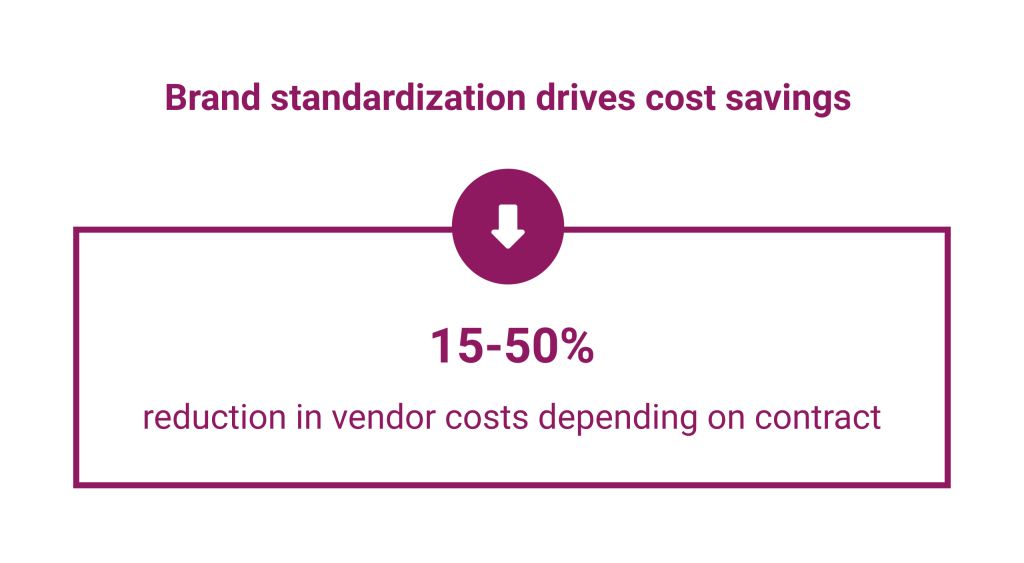
Standardizing brand requirements not only strengthened consistency but also drove significant cost savings, eliminating overpriced vendors and reducing expenses by 15-50% depending on the contract.
Streamlining vendor onboarding and contracting helped accelerate implementation timelines, minimizing delays and ensuring a smoother transition. Additionally, we enhanced security across the system by introducing holograms and a standardized format on ID badges, protecting against counterfeiting while reinforcing trust and safety within the organization. Together, these improvements created a more efficient, cost effective, and secure brand management system.
The outcome: A unified brand that drives efficiency and patient trust
This organization’s rebrand was one of the most ambitious in U.S. healthcare, spanning more than 200 locations, 20 decentralized brand identities, and a complex operational environment. Through strategic planning, operational rigor, and deep collaboration, the organization built a stronger, more recognizable brand that enhances patient trust, improves internal alignment, and reduces costs across the system.
Want to hear more? Contact Claar Ennis at c.ennis@brandactive.com
Respecting client privacy
Some of our most transformative work is featured anonymously, not because it’s confidential, but because our clients, often leaders in their industries, are more comfortable sharing their journey without the spotlight. By respecting this preference, we’re able to highlight real impact and measurable results while honoring the trust that fuels our most effective partnerships.