
Strategic brand transition Strategic brand transition: A global energy technology company’s post-divestiture rebrand
Background: Navigating brand separation after divestiture
Client profile
Industry: Oil & Gas/Energy
Annual revenue: $21-23 billion
System size: ~950 locations
BrandActive services: Brand implementation planning, governance tools, rebrand scoping, asset auditing
In 2020, a global energy technology company began operating as a standalone company after its former parent company completed its divestiture. As part of the separation agreement, the majority of parent-company-related branding had to be removed from the company’s global footprint within one year of the deal closing, a notably compressed timeline given the company’s global scale and the volume of brand touchpoints involved.
The requirement extended across a complex network of physical and digital assets, spanning nearly 950 locations and thousands of branded touchpoints. High-visibility and externally-facing items such as signage, fleet, and workwear were prioritized for immediate transition to meet the one-year deadline. Meanwhile, more cost-intensive assets like products and packaging were allowed to follow a more natural replacement cycle.
The company brought in BrandActive before the deal was finalized to get a clear picture of what the rebrand would involve, how much it would cost, how big the job would be, and what it would take to secure the necessary funding as part of the broader separation planning.
The challenge: Large-scale, high-stakes transition
BrandActive was tasked with developing a global rebrand implementation strategy that aligned with three critical dimensions:
- Legal compliance within a non-negotiable one-year timeframe
- Cost-efficiency to support funding allocation across multiple business units
- Operational feasibility across a globally distributed and complex organization
Branded assets included signage, workwear, fleet, digital systems, and product-related applications. Adding to the challenge were varying regional compliance requirements, such as certification for product name changes, and the need to coordinate among multiple stakeholders and functional teams globally.
The solution: Tiered strategy and cross-functional execution
To guide decision-making and execution, BrandActive deployed a tiered, insight-driven approach:
1. Comprehensive asset audit
We conducted a global audit of branded assets, evaluating their visibility, regulatory significance, and operational impact. This allowed the team to prioritize high-visibility assets and identify opportunities for neutralization or deferral.
2. Right-sized rebrand scope
Using audit insights, BrandActive developed a tiered strategy that categorized assets into three paths:
-
-
- Full rebrand
- Brand neutralization or removal
- Deprioritization due to low visibility or minimal business impact
-
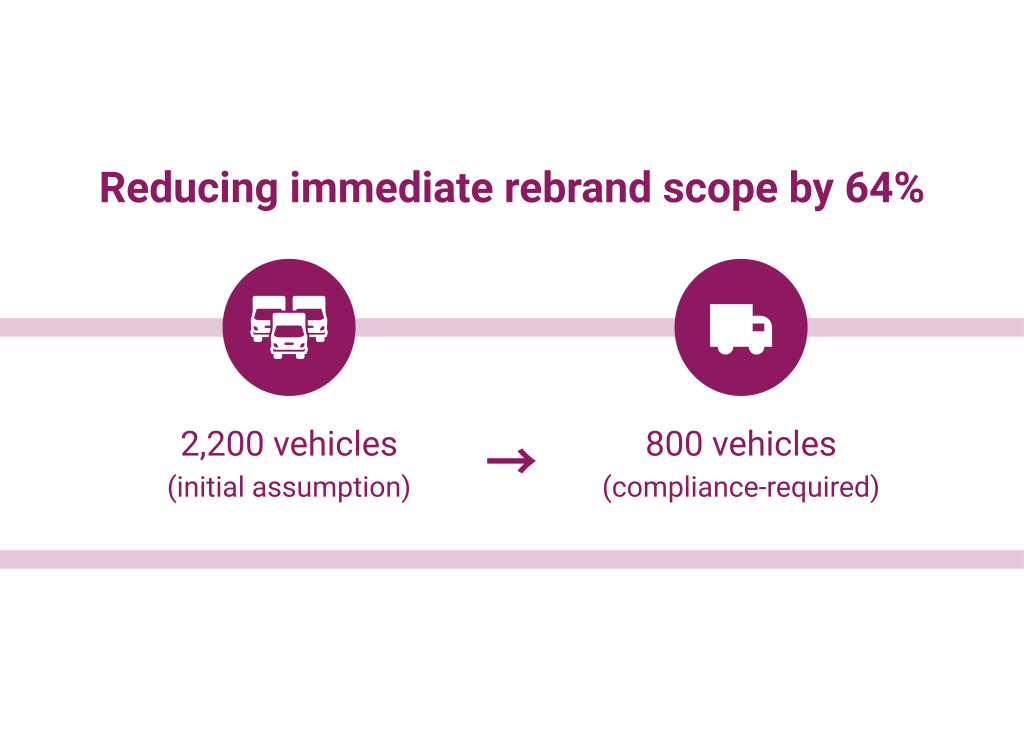
For example, the fleet branding scope was refined from an initial estimate of 2,200 vehicles to a more accurate, compliance-focused total of 800, as only those vehicles carried the former parent company branding. The remaining units were either legacy-branded or unbranded and could transition through normal operational cycles without incurring incremental spend. This reduced both immediate costs and implementation pressure, while still meeting legal obligations.
3. Funding strategy development
The company was operating with three brands in market: the parent company brand, a transitional brand, and its legacy brand. Each had distinct visual identifiers across a vast ecosystem of assets. To make smart funding decisions, we first mapped the brand landscape, including determining what assets carried which brand, where they were located, and how critical they were to external perception and regulatory compliance.
To decide which rebrand activities should be centrally funded versus absorbed by operational budgets, we had to answer one essential question: What needed to change immediately and what could wait?
This assessment became the foundation for a strategic tiering model. For each asset type, we asked:
-
-
- Is it client-facing or internal?
- Is it located in a priority region?
- Does it require compliance within Year 1 of the separation?
- Can it be updated during a natural replacement cycle?
-
For the finance team, this approach offered three critical benefits:
-
-
- Clarity on obligations – What must be done to stay compliant and by when.
- Prioritized investment – Where to focus central funds for maximum impact.
- Operational guidance – How to allocate and plan local budgets without duplication or delay.
-
4. Coordinated execution
Over 20 cross-functional workstreams were managed to drive alignment between business units, product teams, and leadership, ensuring that legal, operational, and brand requirements were met consistently across geographies. This collaborative structure also enabled smarter budget planning.
For instance, when assessing the global fleet of around 2,200 vehicles, we worked across regional teams to consolidate fragmented data and clarify current branding.
Roughly 800 vehicles carried former parent company branding, triggering a compliance obligation tied to the divestiture timeline. These were prioritized for immediate rebranding and allocated to the central separation budget. The remaining vehicles, either unbranded or branded with legacy identities, were not legally required to change and could be transitioned through routine operational cycles, avoiding unnecessary spend and easing local implementation.
By embedding financial logic into operational workflows, we helped the company apply brand strategy through a funding lens, making it easier for cross-functional leaders to plan, align, and act.
Results: A compliant, scalable brand transition
The rebrand was completed within the one-year compliance window, fulfilling all legal obligations and enabling the company to fully emerge as a standalone brand. But the impact went deeper than compliance.
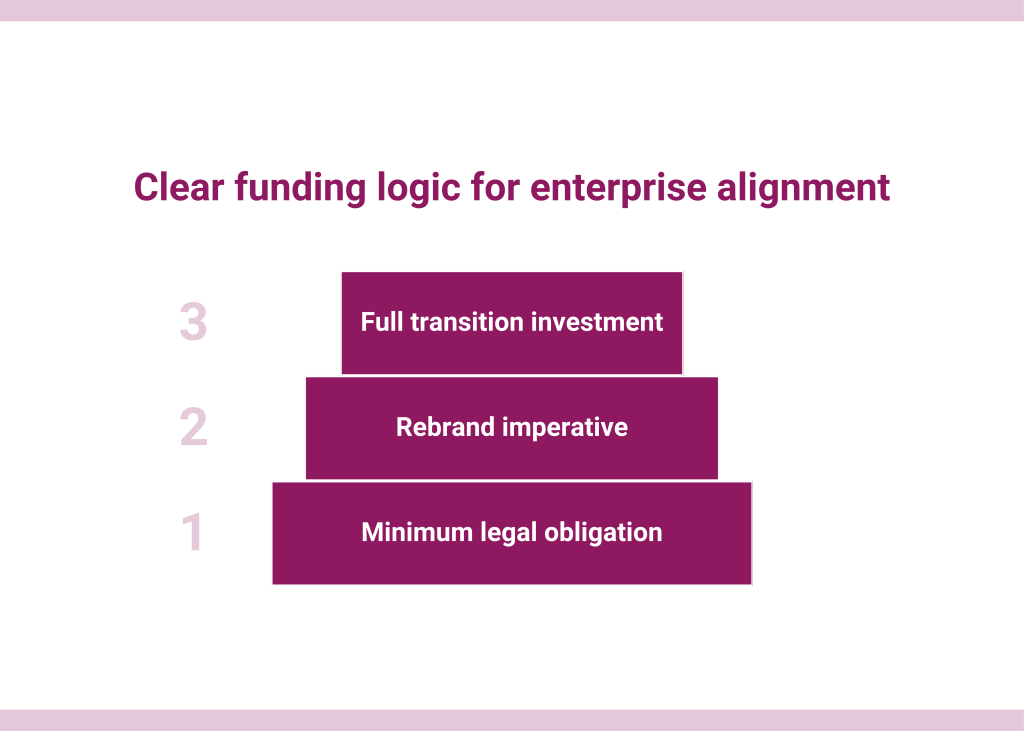
We didn’t just determine the overall rebrand budget, we broke it down into three actionable tiers:
-
-
- Minimum legal obligation – The baseline incremental spend required to meet separation requirements.
- Rebrand imperative – Strategic investments aligned with compliance timing, targeting high-impact, client-facing assets.
- Full project rebrand transition – Long-term investments to support the company’s identity, brand consistency, and future growth.
-
This structure was pivotal. It helped the client size the total effort and decide how funding should be allocated, between Corporate and Product Teams, and what tradeoffs were at stake if only partial funding was secured. By supporting internal champions with this level of clarity, BrandActive helped shape funding conversations that were both practical and persuasive.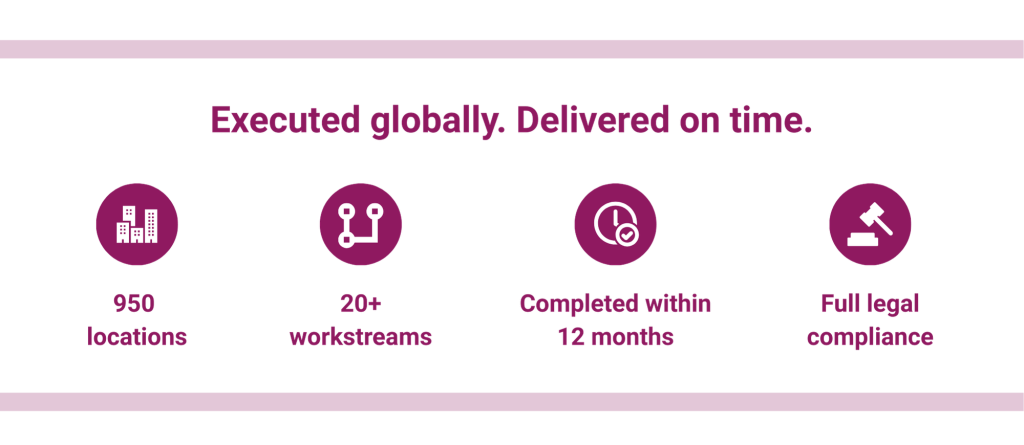
Key outcomes included:
- Full compliance with all separation-related brand removal requirements
- Significant cost savings through scoped rebranding and neutralization strategies
- Clear, tiered funding strategy that guided who pays for what
- Operational alignment with minimal disruption to business activities
- A rebrand framework that balanced compliance, consistency, and cost
This project reflects how a structured, insight-led approach can guide global brand transitions with clarity, compliance, and efficiency.
For organizations navigating a divestiture, merger, or transformation, we provide the frameworks and expertise to manage complexity and deliver outcomes that meet business, legal, and brand objectives. Want to discuss your rebrand implementation? Reach out to Jenn at j.farrelly@brandactive.com
Respecting Client Privacy
Some of our most transformative work is featured anonymously, not because it’s confidential, but because our clients, often leaders in their industries, are more comfortable sharing their journey without the spotlight. By respecting this preference, we’re able to highlight real impact and measurable results while honoring the trust that fuels our most effective partnerships