
As financial institutions pursue growth through mergers and acquisitions, much of the focus goes to integration planning and regulatory approvals. But when the deal is done, one critical milestone often slips off the radar: the brand rollout.
This moment is more than symbolic. It’s the first public test of the merger. Customers, employees, and regulators are watching closely to see whether the organization delivers on its promise of unity and stability.
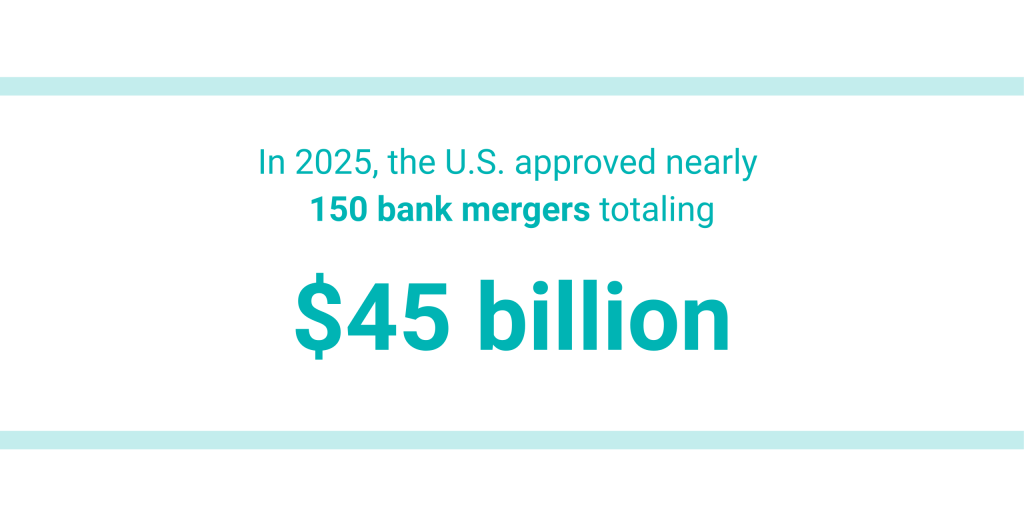
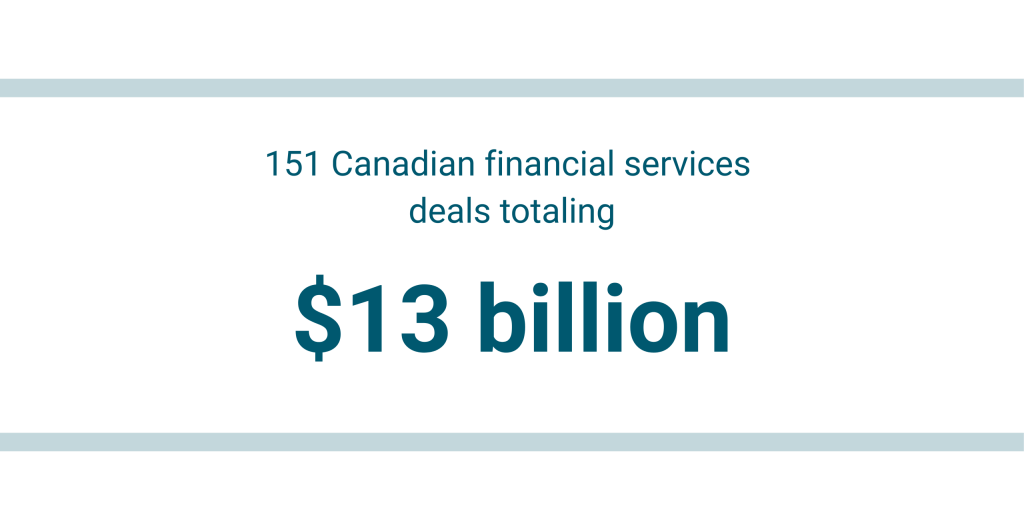
In 2025, the U.S. approved nearly 150 bank mergers totaling $45 billion. In Canada, 151 financial services deals represented $13 billion in transaction volume. With consolidation accelerating, brand implementation is becoming a high-stakes, high-visibility effort. And too many institutions are still underestimating what it takes to get it right.
Here’s where M&A rebrands tend to go off track and how financial institutions can avoid the pitfalls.
1. Overlooking the full impact on customer experience
Outdated signage. Conflicting app experiences. Customer letters with mismatched logos. These issues might seem small, but they create real tension for customers who are looking for clarity and reassurance.
We’ve seen confusion spike when a refreshed brand is rolled out in digital channels, while legacy signage and printed statements remain unchanged, creating a fragmented experience. In one case, a regulatory fine was issued after a single ATM banner was overlooked during a transition. These challenges often arise when internal teams move forward without a full implementation plan in place, and they are exactly the kinds of gaps BrandActive is brought in to help close.
Client example: National bank merger
After a large-scale merger, this institution needed to rebrand over 25,000 assets across 14 business lines. BrandActive led asset audits, vendor coordination, and cross-functional planning. The rollout was completed on time, with millions saved through prioritization and asset rationalization.
2. Misjudging how compliance shapes the rollout
Every branded touchpoint is a potential compliance risk. From rate sheets and legal disclosures to branch signage and bilingual communications, branding decisions must align with strict regulatory standards.
Yet many institutions delay involving Legal, Risk, or Compliance teams until creative work is well underway. That delay can create ripple effects, especially when regional or market-specific rules surface late in the process.
We’ve seen this dynamic play out prior to our involvement in several engagements, with rollout timelines disrupted by unexpected review cycles, approval bottlenecks, or unanticipated disclosure requirements. In some cases, failure to comply with regulations from agencies like the OCC, FDIC, or FINRA can lead to financial penalties, audit findings, or reputational risk.
3. Miscalculating the internal lift and coordination required
Many institutions start with the goal of managing their rebrand internally. But as the true volume of assets, systems, and vendors becomes clear, teams quickly hit their limits.
We’ve seen marketing and operations teams pulled into tracking spreadsheets, coordinating with dozens of local vendors, and chasing down timelines without the tools or resources to manage it effectively. This leads to missed details, slowdowns, and inconsistent execution.
In one case, a client had lost access to key implementation vendors after regulatory delays shifted their original timeline. In another, teams were scrambling to bring on a specialized signage partner late in the process to manage high-visibility sponsorships nearing renewal. We’ve encountered these kinds of challenges when brought in midstream, often at a point where teams are looking to regain control and move forward with greater structure. These kinds of disruptions can often be avoided when experienced implementation partners are engaged early, with a clear roadmap and proactive coordination from the start.
Client example: Multi-market rebrand after merger
A national financial institution engaged BrandActive when internal teams were stretched thin managing competing priorities. Our team built the operational infrastructure to track branded assets, manage vendor workflows, and maintain executive visibility across dozens of concurrent workstreams.
4. Approaching budgets without strategy or scenarios
Rebrand budgets are not approved based on creative ambition. They are funded when they are grounded in risk, compliance requirements, and operational efficiency.
CMOs who gain traction in budget conversations come prepared with rollout scenarios, detailed asset data, and clear explanations of trade-offs. They don’t just estimate. They model what happens when a rollout is completed in three months, phased over three years, or delayed due to unapproved signage or missed disclosures.
Client example: National financial services firm
This client secured funding for a multi-year phased rollout after BrandActive developed side-by-side implementation scenarios, including timelines, risks, and financial implications. The structured approach helped align finance, procurement, and brand leadership, while avoiding more than $17 million in unnecessary spend.
If you’re evaluating whether to manage rebrand implementation internally or with outside support, this guide can help:
Choosing the right path for brand implementation
5. Missing the opportunity to reinforce brand trust
Customers form impressions quickly. When a rebrand is launched but inconsistencies remain, it sends a message that the organization may not be as aligned or prepared as it claims to be. Employees also notice, especially if internal systems or frontline training don’t reflect the new brand.
Some institutions use this milestone to drive broader transformation. They consolidate assets, modernize workflows, and bring clarity to legacy systems. Others focus narrowly on execution, without building in flexibility or governance for future needs.
We’ve seen both scenarios, and the outcomes speak for themselves.
Final thought: A rebrand shapes how your institution shows up in the moments that matter.
It’s a chance to build trust, reinforce stability, and set the tone for what comes next.
BrandActive helps financial institutions manage rebrand implementation with clarity, structure, and speed. Whether you’re planning or already underway, we’ll help you move forward with confidence.
Have questions or curious about how we can help with your next brand
implementation? Reach out to Sarah Icely-Hill at s.icely@brandactive.com.